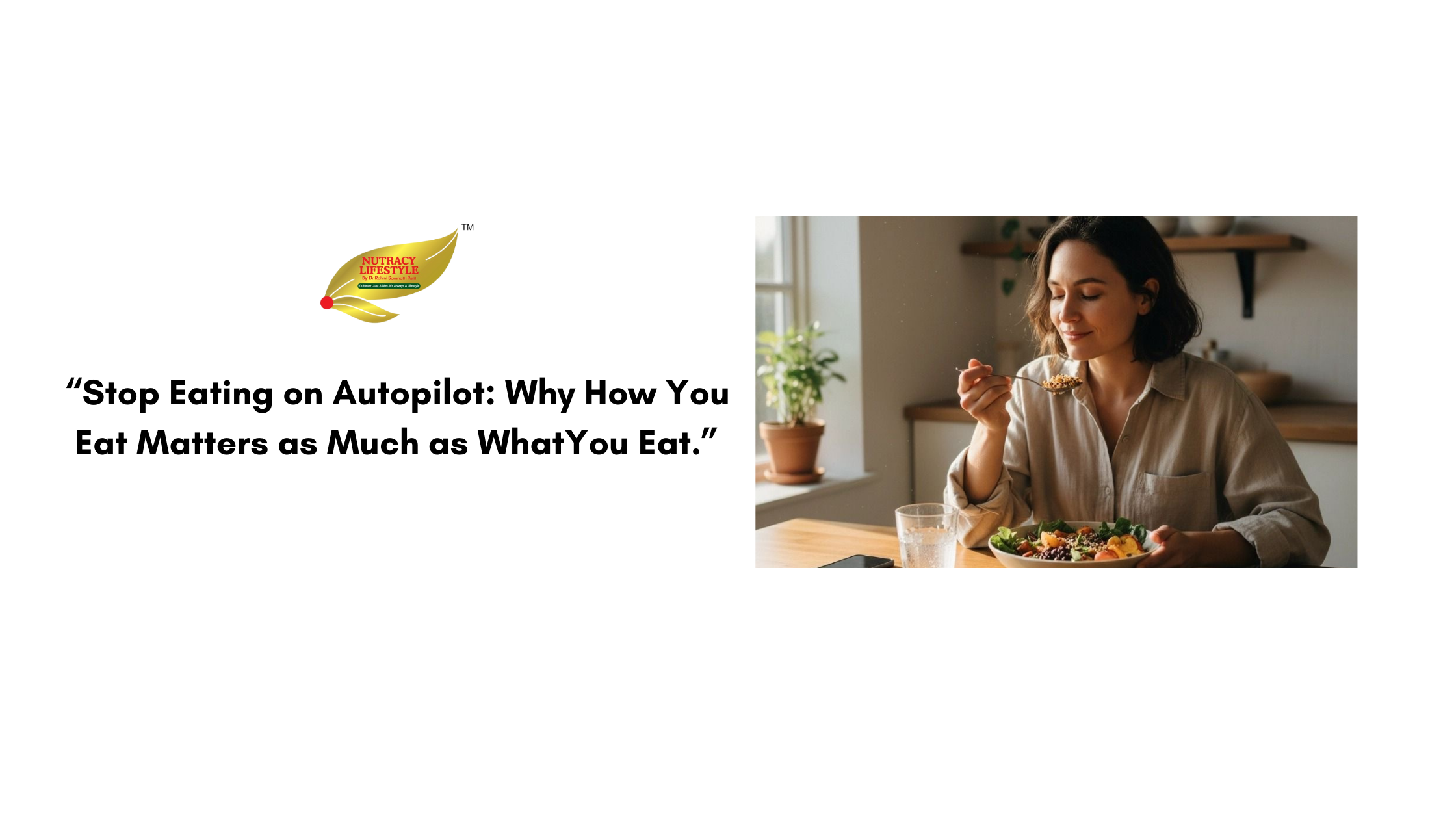
I’ll be honest: for years, I treated my lunch break like a pit stop in a Formula 1 race. I’d stand over the kitchen sink, scrolling through emails with one hand and shoving a salad into my mouth with the other. By the time I was finished, I didn't even remember tasting the food. Ten minutes later? I was hungry again.
We spend so much time obsessing over what to eat—low carb, high protein, keto, paleo—that we’ve completely forgotten how to eat.
The Science of "Slowing Down"
Digestion doesn't start in your stomach; it starts in your brain. This is called the Cephalic Phase of Digestion. When you see, smell, and anticipate a meal, your brain signals your salivary glands to produce enzymes and your stomach to produce acid.
If you eat while stressed, driving, or distracted by a screen, your body stays in "Sympathetic" (fight-or-flight) mode. Your brain doesn't fully register the food, meaning:
- Poor Nutrient Absorption: Your body isn't optimized to break down the food.
- Missing Fullness Cues: The "I'm full" signal takes about 20 minutes to travel from your gut to your brain. If you finish in five minutes, you’ll overeat before the signal arrives.The Mindful Eating Comparison
Mindless Eating | Mindful Eating |
Eating until the plate is empty. | Eating until the body feels satisfied. |
Eating while distracted (TV, Phone). | Eating as a single task (no screens). |
Choosing food based on "rules" or guilt. | Choosing food that nourishes and tastes good. |
Snacking out of boredom or stress. | Snacking because of physical hunger. |
The 5-Sense Check-In
Before your next meal, try this 30-second human "reset" to get out of your head and into your body:
- Sight: What colors are on my plate?
- Smell: What herbs or spices can I catch a whiff of?
- Touch: What is the texture? (Crunchy, creamy, warm?)
- Sound: Is the environment quiet enough for me to focus?
- Taste: Actually let the food sit on your tongue before swallowing.
Using the Hunger-Fullness Scale
One of the most powerful tools in nutrition is the 1-to-10 scale. Most of us wait until we are a "1" (ravenous) to eat, which leads us to eat until we are a "10" (painfully full).
- The Sweet Spot: Start eating when you are at a 3 or 4 (gentle hunger growls).
- The Stopping Point: Stop when you are at a 6 or 7 (satisfied and energized, but not "stuffed").
The Takeaway: You don't need a new meal plan to start feeling better today. You just need to sit down, put the phone in the other room, and re-learn how to enjoy your food. Your digestion—and your stress levels—will thank you.